Fast garage door repair in Hoffman EstatesCall (847) 859-1949
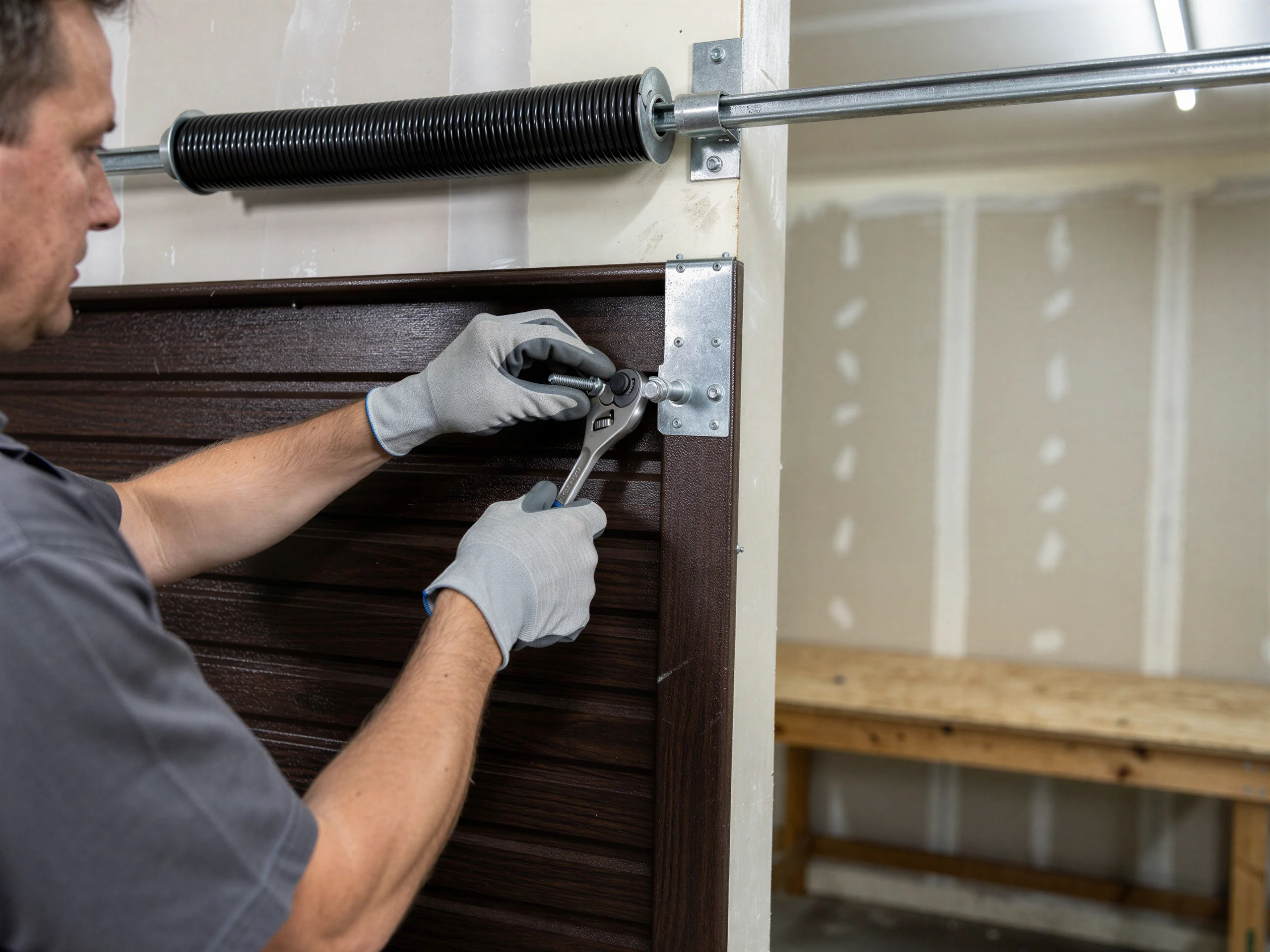
A technician in gloves adjusts a brown garage door with a wrench.

Elmhurst, Hoffman Estates

Garage Door Repair for Elmhurst's 1960s Housing Stock

Elmhurst homes mostly date to 1964, older hardware than much of our area. We drive 16 miles from Hoffman Estates to fix springs, rollers, and openers.

Serving Hoffman Estates, ILBackground-checked techsHonest, upfront pricingFast local response

The repair

What the Repair Takes

Elmhurst's housing stock centers on 1964, a full decade ahead of the 1981 median we see across the broader service area. That matters because it tells us what's behind the door before we open the truck.

  1. Extension springs with rollers

    A lot of garages here still carry the extension-spring setups that were standard before torsion drums became the default, paired with single-row steel rollers that were never swapped out. A repair call means pulling the right parts for that era - not the universal kit that works on a 1995 build.

  2. Sixteen-mile scheduled drive

    We drive the 16 miles out from Hoffman Estates for every job, and that drive gets built into the day's schedule before the first bolt comes off. Some of these doors have had partial upgrades over the decades - a newer opener bolted to old track, or a torsion conversion done without replacing the worn jamb brackets underneath.

  3. Original versus patched hardware

    Sorting out what's original and what's been patched takes an extra ten minutes on site, and it's worth that time. Guessing at hardware generation on a house this age is how a tech shows up with the wrong spring and has to turn the job into a second trip.

Watch-outs

What Can Go Wrong

On a door this age, the failure points cluster in predictable spots. Extension springs stretched daily for sixty years fray at the hook end long before the coil itself gives out, and when one side snaps the door racks sideways in the track instead of dropping straight.

Oval groove from old rollers

Rollers that have never been replaced wear an oval groove into the track, which makes the door bind on the way up even when the opener motor is fine. We also see openers from a later decade bolted onto original hardware that was never meant to take motorized pull - the arm bracket pulls loose from a panel that's gone soft with age.

Rusted bottom corner panel

None of this is exotic. It's just what sixty-year-old steel does under daily load. One honest limit: if the panel itself has rusted through at the bottom corner, we're not going to patch it and call it fixed.

Rust signals end-of-life

On a door this old, a rusted panel usually means the rest of the door isn't far behind, and we'll say so rather than bill for a repair that won't hold through next winter.

Local causes

Why It Happens Here

The service area sits in a cold climate band with severe winters, and Elmhurst's older stock takes that harder than newer construction does. A door built in 1964 has gone through roughly sixty freeze-thaw cycles, each one working the bottom seal, the weatherstrip channel, and the steel panel seams a little looser. Extension springs lose tension faster in cold garages than torsion springs do, since the coil itself contracts and expands with the swings between a 20-degree morning and a 40-degree afternoon. On newer doors elsewhere in the territory, built with torsion systems and better insulation, that cycling is less punishing. Here, with original or near-original hardware still in a lot of garages, the cold does more work on parts that were already past their expected life. It's not that Elmhurst gets worse weather than the rest of the territory - it's that the hardware taking that weather is older, and older steel and older springs don't shrug off forty winters the way a 2005 door does.

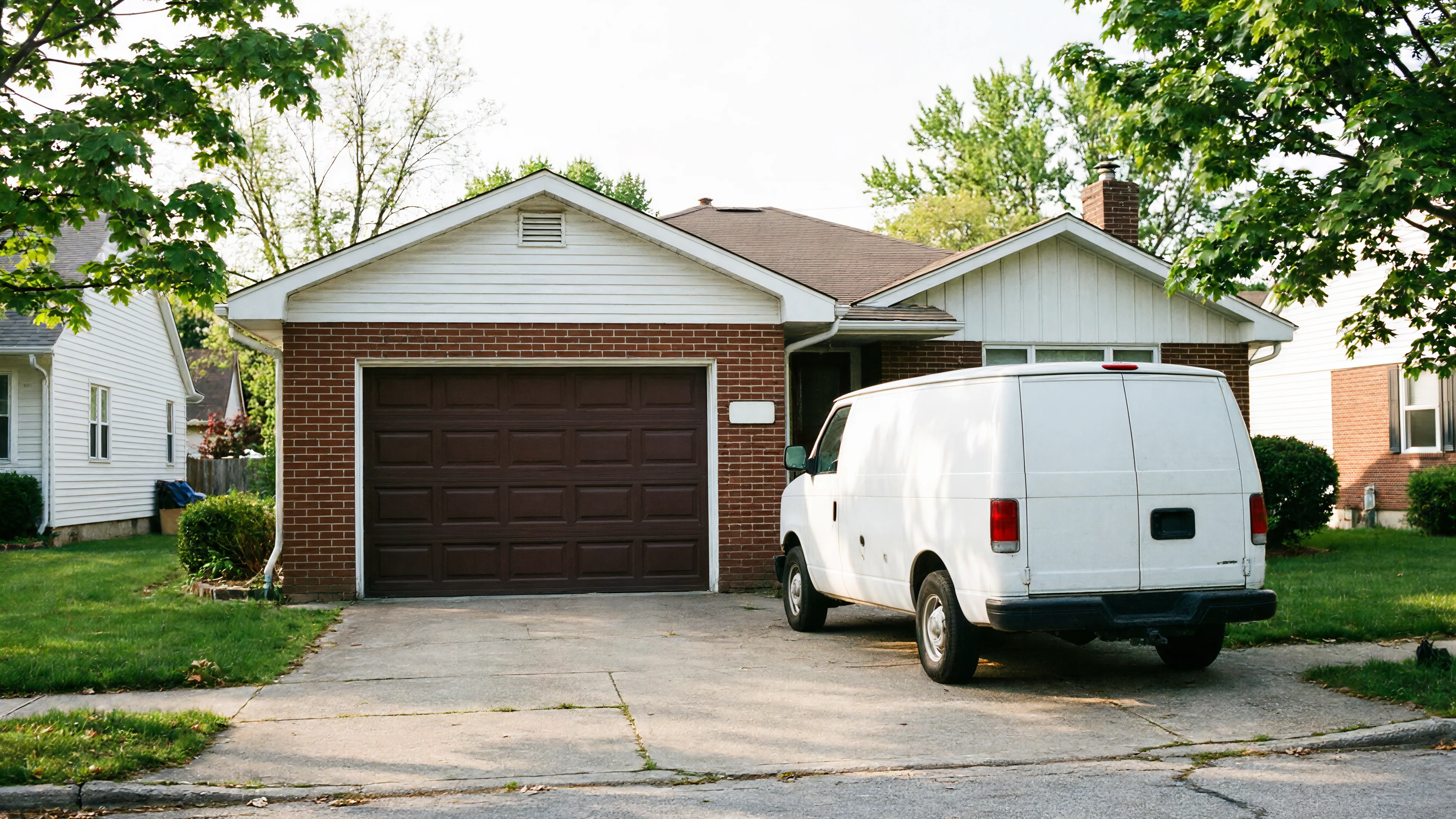
A white van is parked in a driveway in front of a brick house with a brown garage door.

Downtime

How Long You Are Without the Door

We're honest about one thing up front: Elmhurst is 16 miles from where our trucks are based in Hoffman Estates, so a same-day call here depends on where the truck already is that morning, not on a promise we can make in writing.

Stock-dependent same-visit fixes

What we can tell you is what drives the timeline once we're on site. A spring swap or roller replacement on original 1960s hardware is usually a same-visit fix if we're carrying the right stock - we know the era, we know what to bring.

Obsolete spring length or track

Where it slows down is a part that's genuinely obsolete: a specific extension spring length, or a track profile that nobody makes anymore. On a door this age, that's not rare, and when it happens we'll tell you straight that the part needs to be special-ordered rather than quote a timeline we can't back up.

Replacement faster than waiting

Replacement, when it's the better call, moves faster than a repair chasing a discontinued part - sometimes the honest answer is that a new door beats waiting on one.

DIY or pro

The DIY Question

A broken extension spring on a door this old is not a weekend project, and we'd rather say that plainly than have someone learn it the hard way.

Corroded spring brackets

Extension springs store less tension than torsion springs, but on a door built before 1970 the mounting brackets have had sixty years to rust and weaken, and a spring under load through a corroded bracket can let go without warning.

Rollers and track allowed

Rollers and track are a different story - cleaning and lubricating what's there is reasonable for most owners, and it buys time between real repairs. What we'd steer you away from is anything involving the spring itself, the cable, or pulling an opener motor off original hardware you haven't inspected.

Hidden brittleness and injury

On a house from 1964, the parts underneath the visible wear are usually older and more brittle than they look, and that's exactly where a DIY repair turns into an ER visit instead of a garage door fix.

Warning signs

How It Shows Up

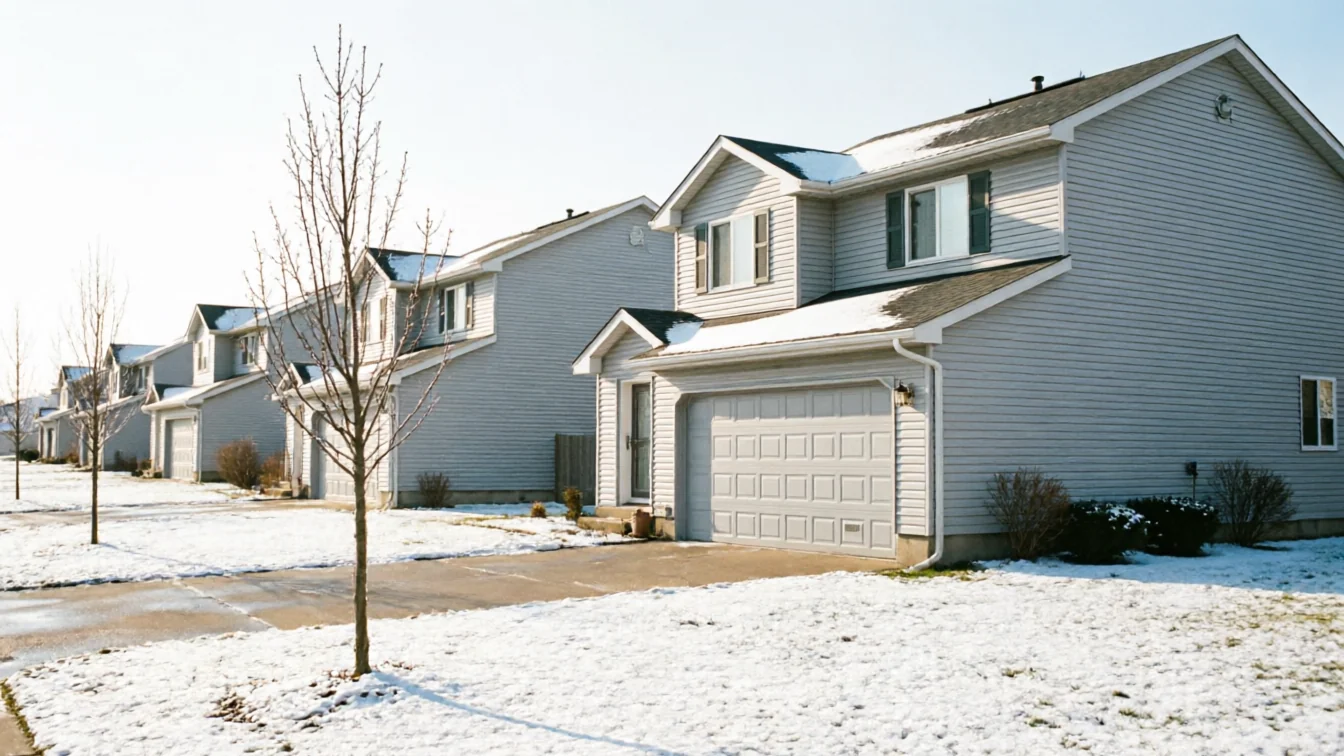
A row of houses with light gray siding and white garage doors in winter.

Owners here usually notice the same handful of signs. The door starts closing unevenly, dropping faster on one side as one extension spring loses tension ahead of the other. The opener strains and makes a grinding sound partway through the cycle - that's often the motor compensating for rollers binding in a worn track, not a motor problem at all. Some owners catch it early because Elmhurst's household income, at $145,374, sits well above the $111,898 median across the wider service area, and homeowners here tend to call at the first odd noise rather than wait for a full failure. That's a good habit on a door this age - catching a frayed cable or a loosening bracket before it lets go saves both money and risk. Across the roughly 16,863 households in town, the pattern repeats enough that we can usually tell what we're dealing with from the description alone, before the truck even leaves Hoffman Estates.

Questions

Common questions

Why does my 1960s garage door need different parts than my neighbor's newer one?

Doors built around 1964 mostly ran extension springs and single-row rollers, not the torsion-drum systems that became standard later. The bracket spacing, cable routing, and spring length are all different generations of hardware, so a repair kit sized for a 1990s door often doesn't fit a 1964 one.

Do you have a local branch in Elmhurst?

No. We're based in Hoffman Estates and drive the 16 miles out for every Elmhurst call. We don't keep a depot or stock in town, so scheduling depends on where the truck already is that day rather than a fixed local response time.

Is it worth repairing a door this old or should I replace it?

Depends on what's failing. A spring, cable, or roller swap on sound panels is usually worth repairing. If the panel's rusted through at the bottom or the track profile is discontinued and hard to source, replacement often ends up cheaper and faster than chasing obsolete parts.

Why do extension springs fail more in winter here?

The service area sits in a cold climate band with severe winters, and extension spring steel loses tension faster through repeated freeze-thaw cycling than torsion springs do. On a door that's already sixty years old, that cycling has had decades to work the coil and the mounting brackets loose.

Explore more

More Services in Elmhurst

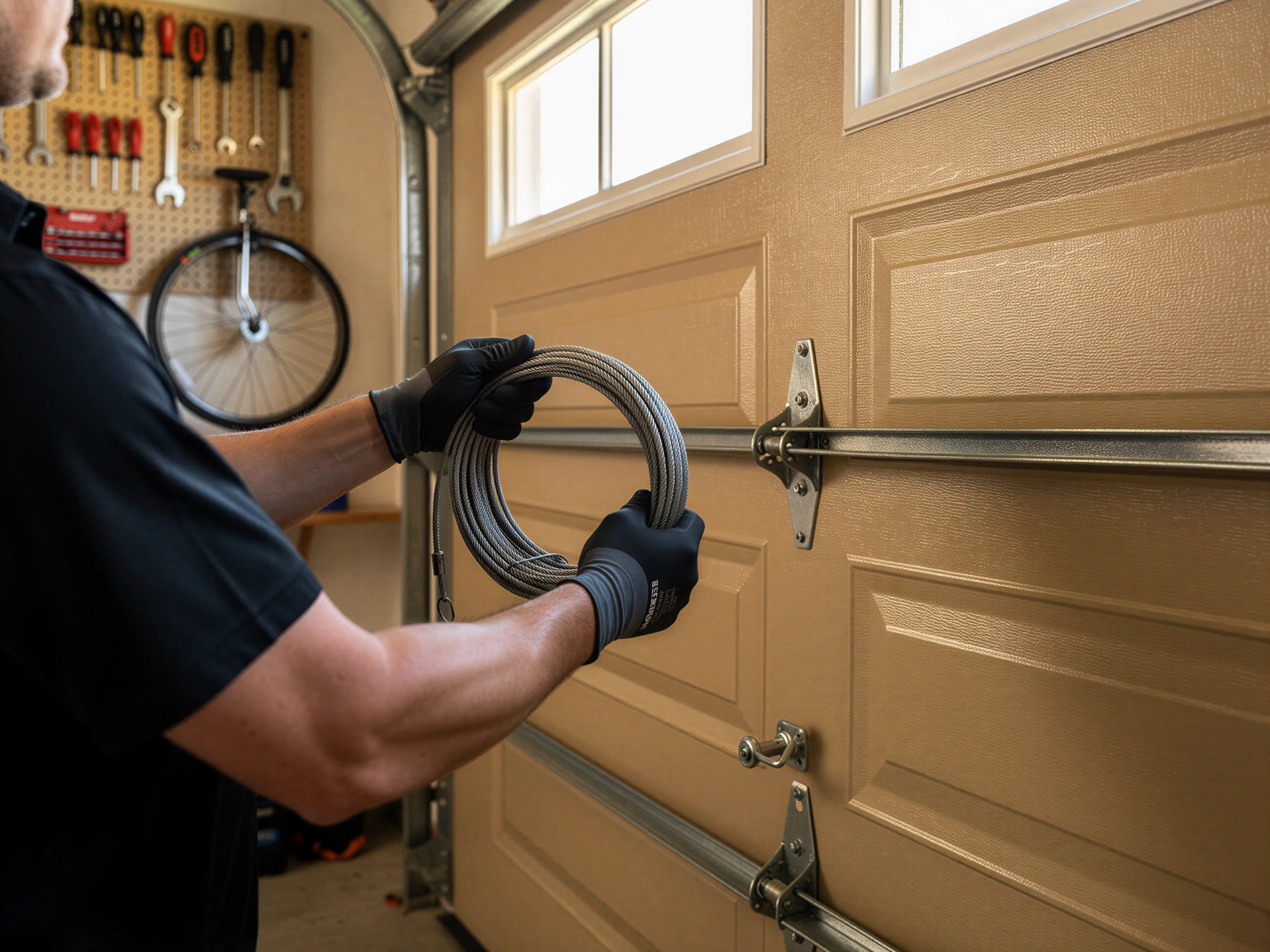
A technician in black gloves holds a coiled cable next to a tan garage door.

Cable Repair

Elmhurst's 16,863 households sit on 1960s-era construction, older than most of the service area. Learn more →
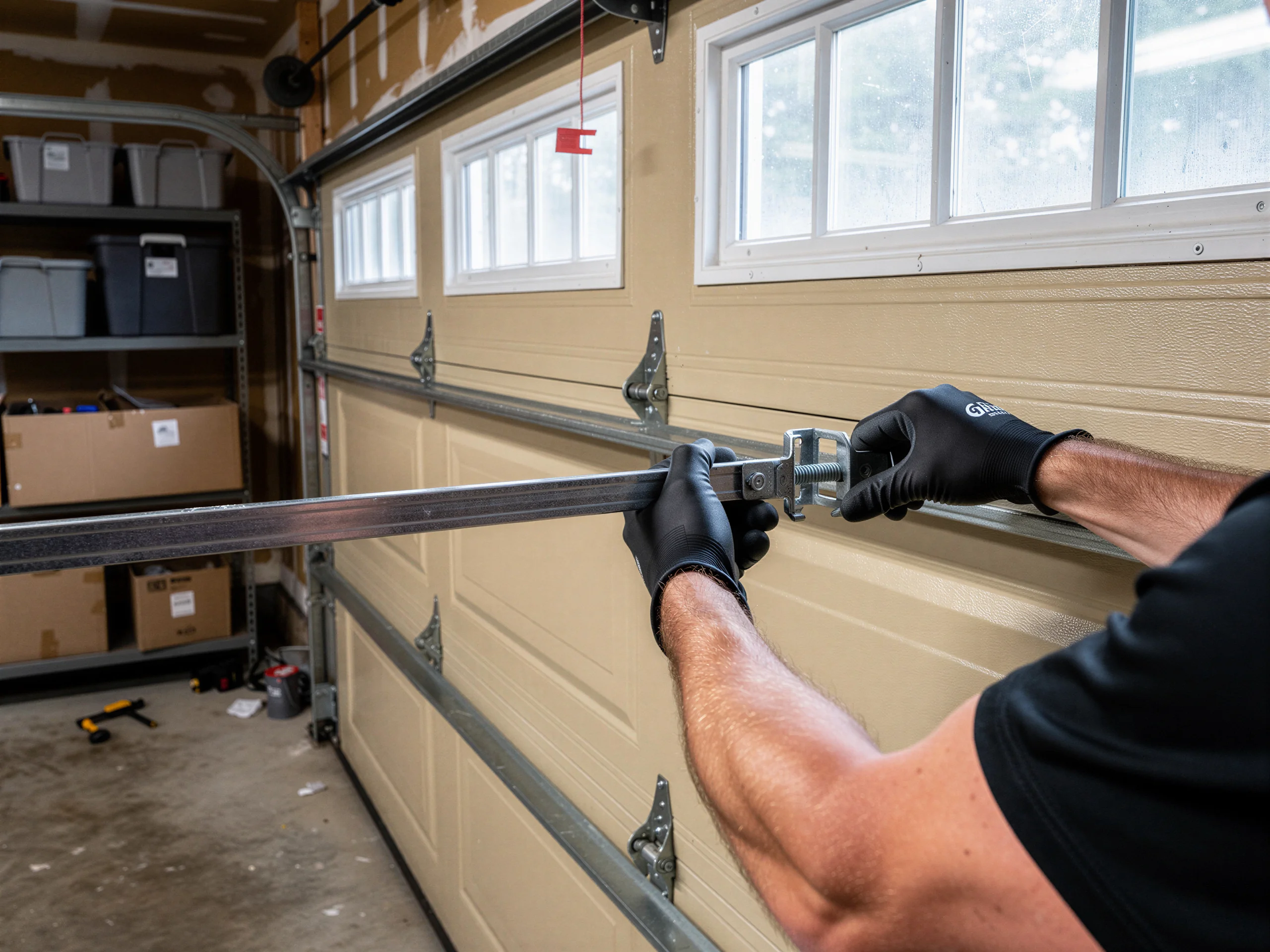
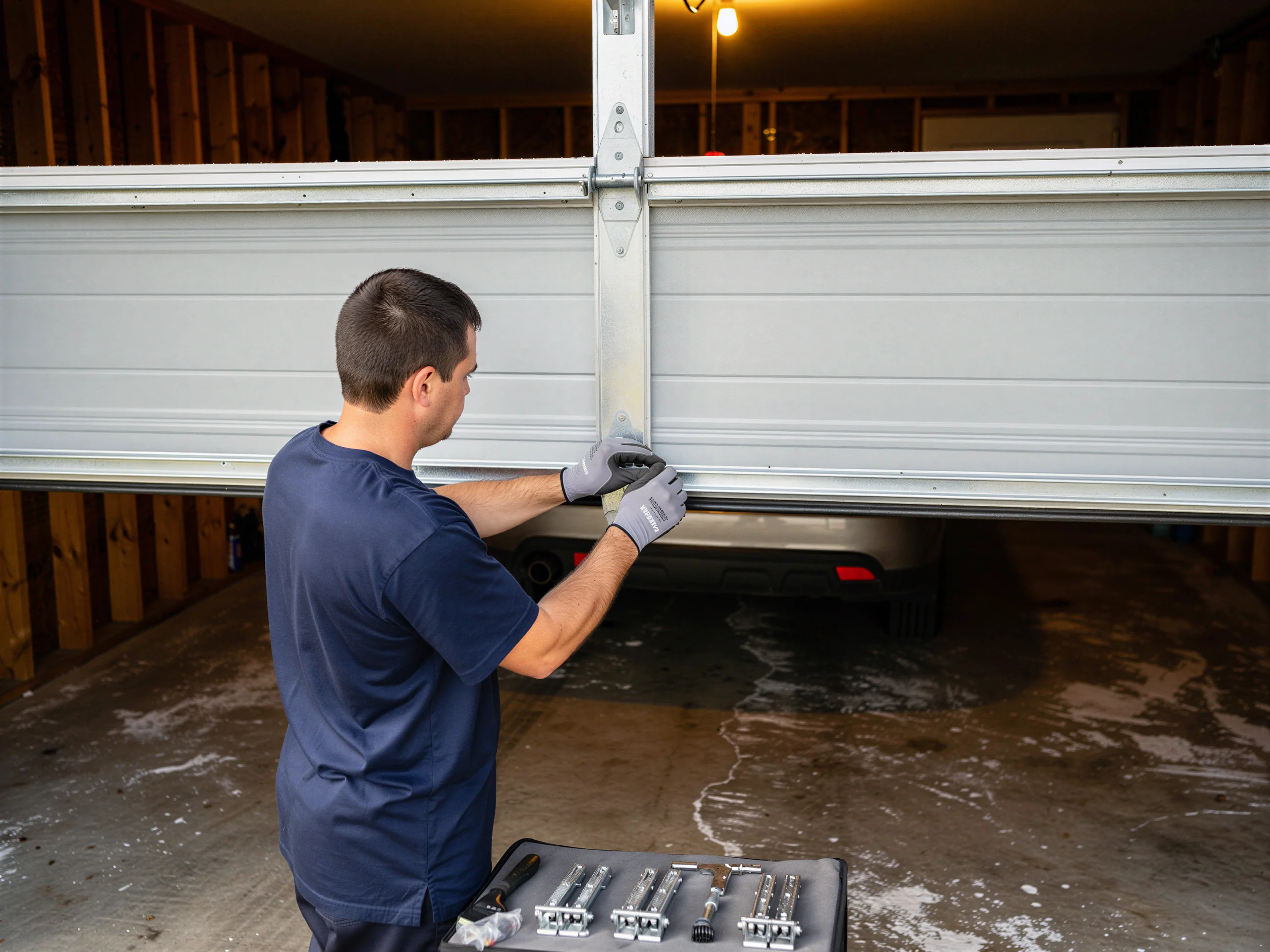
A technician in black gloves adjusts a metal garage door strut.

Garage Door Repair

Elmhurst homes went up around 1964, years before the service area's 1981 median. Learn more →
A technician in gloves adjusts a brown garage door with a wrench.

Maintenance

Elmhurst homes run older than most of our service area and sit well above its income line. Learn more →
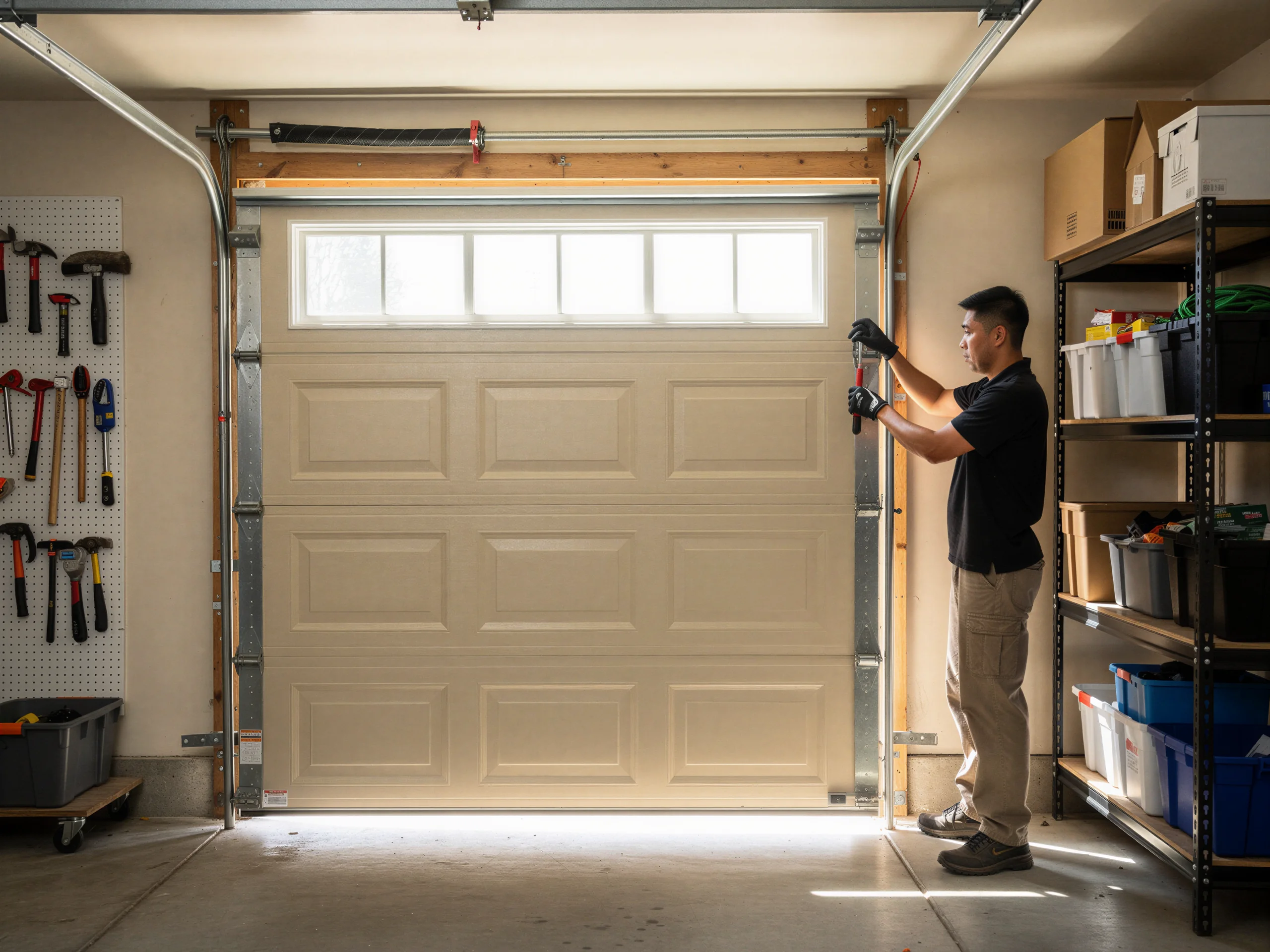
A technician in black gloves adjusts a beige garage door with windows.

New Door Installation

Elmhurst homes date to 1964, older than our area's typical 1980s-90s stock. Learn more →
A technician in gloves is working on a white garage door.

Panel Replacement

Elmhurst's garage doors mostly date to the 1960s housing boom, meaning single-skin steel panels and dented low-gauge sections. Learn more →
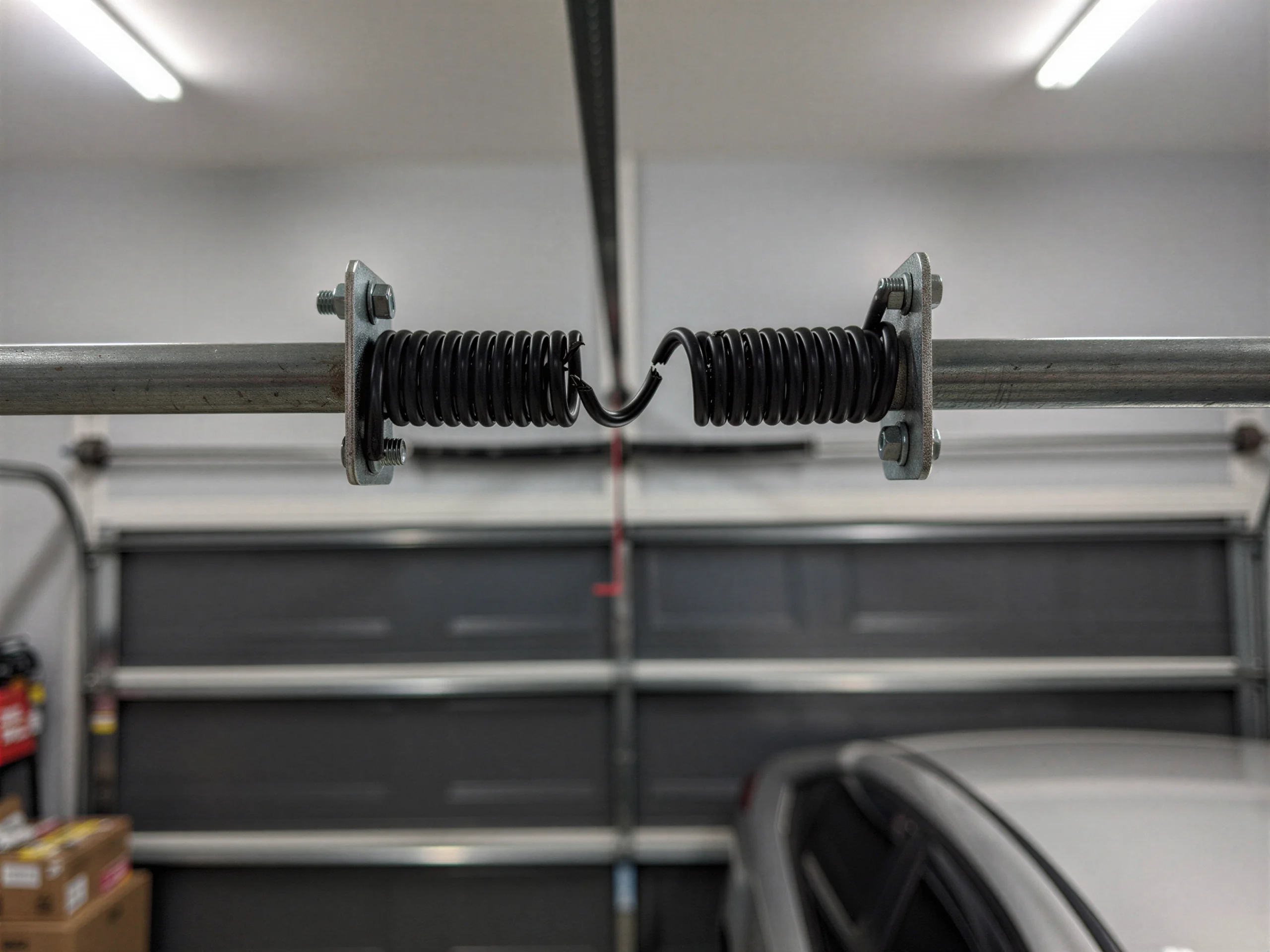
A broken torsion spring is visible on a metal rod above a garage door.

Spring Repair

Elmhurst homes mostly date to 1964, decades before much of our coverage area. Learn more →

Ready when you are

Need a garage door sorted in Hoffman Estates?

Hoffman Estates Garage Door Pros repairs and installs garage doors, springs and openers in Hoffman Estates, IL and the surrounding area.

Call Now(847) 859-1949