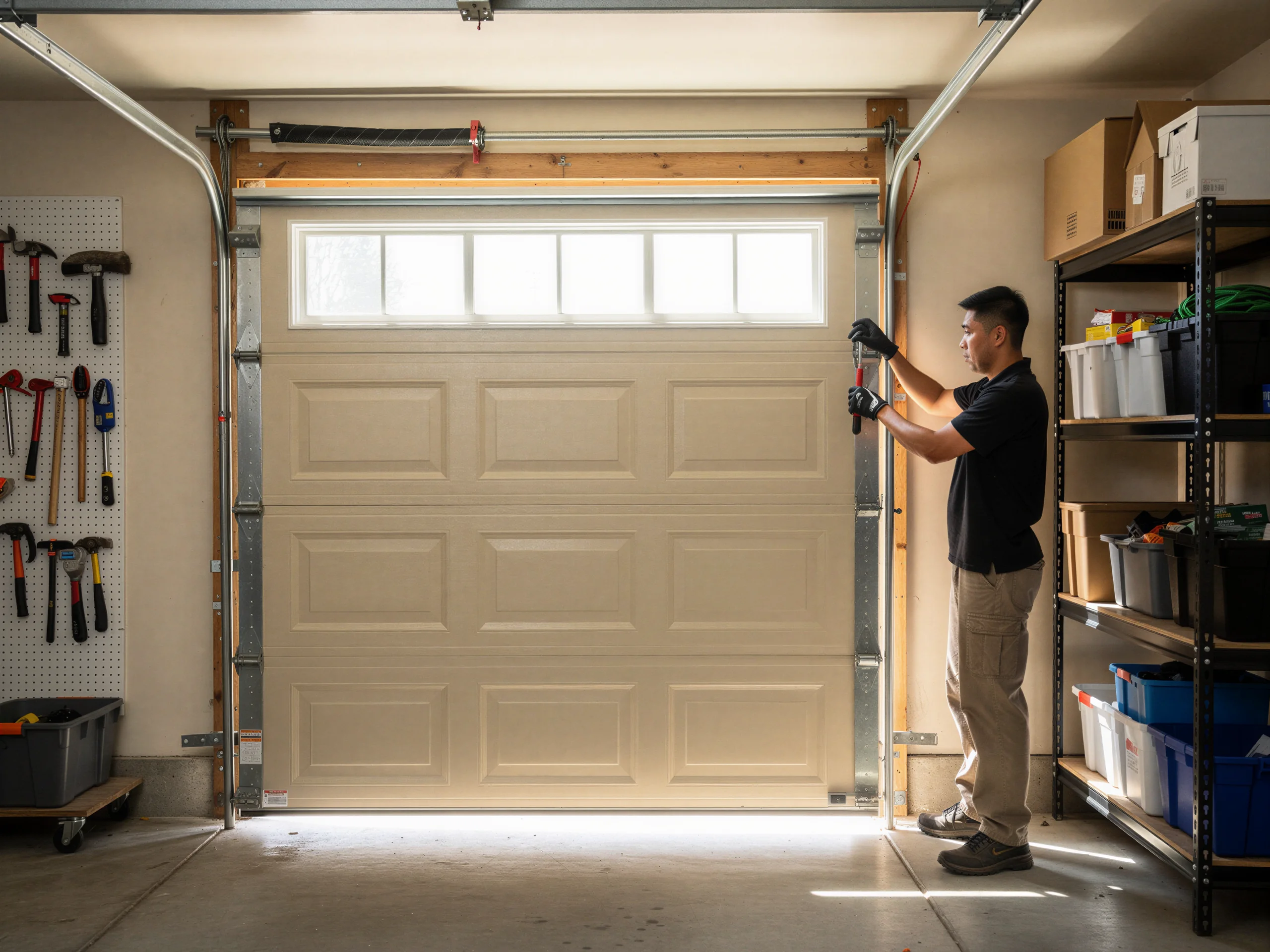
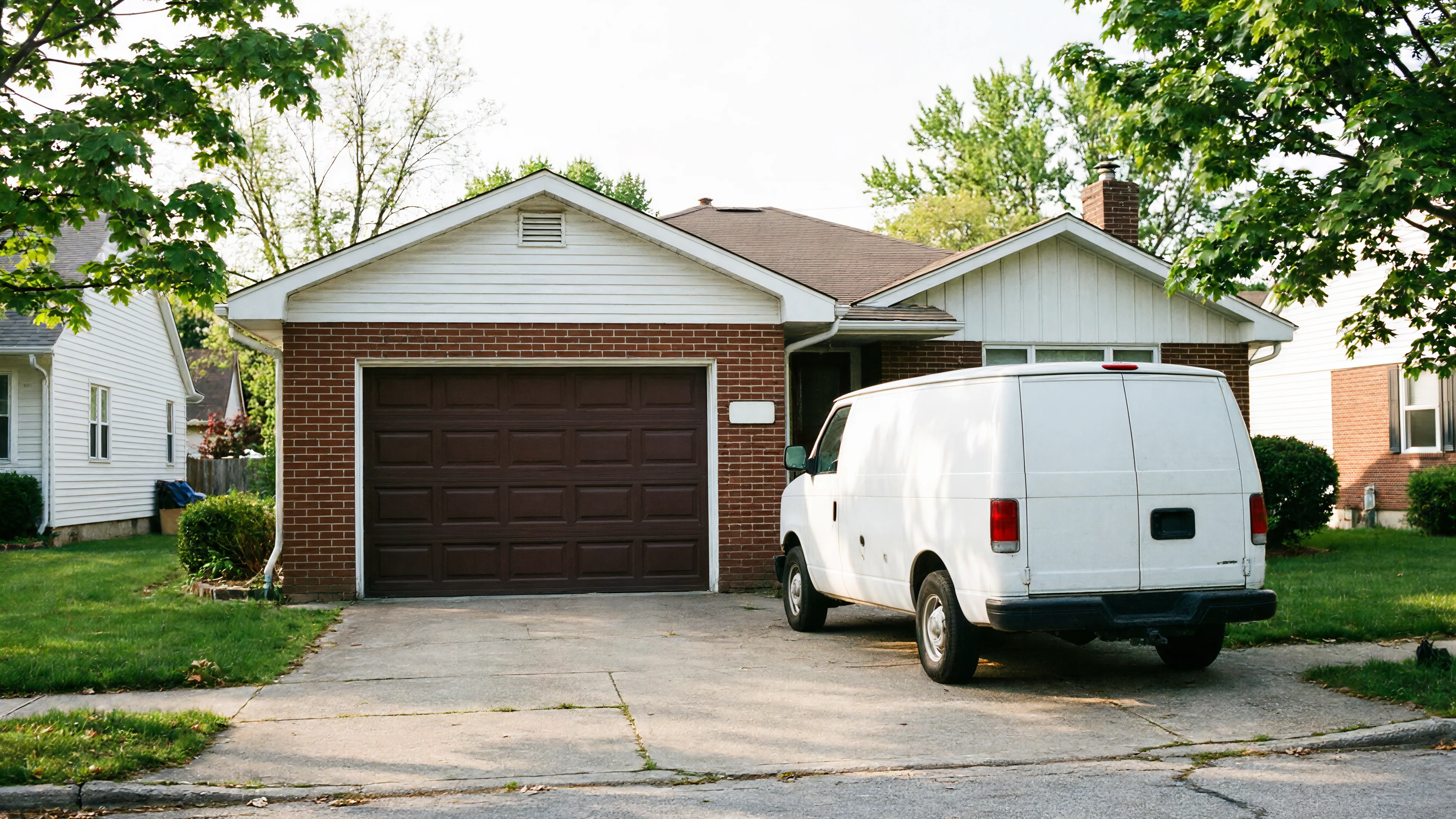
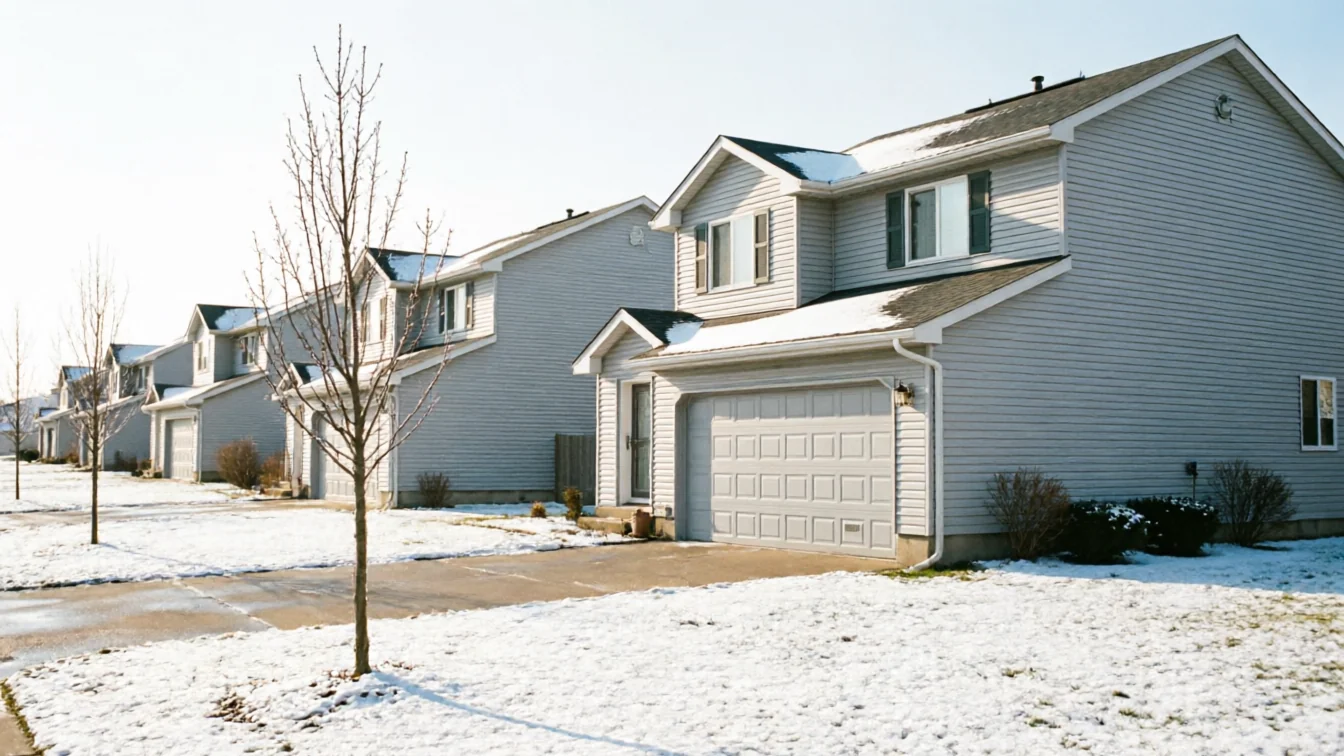
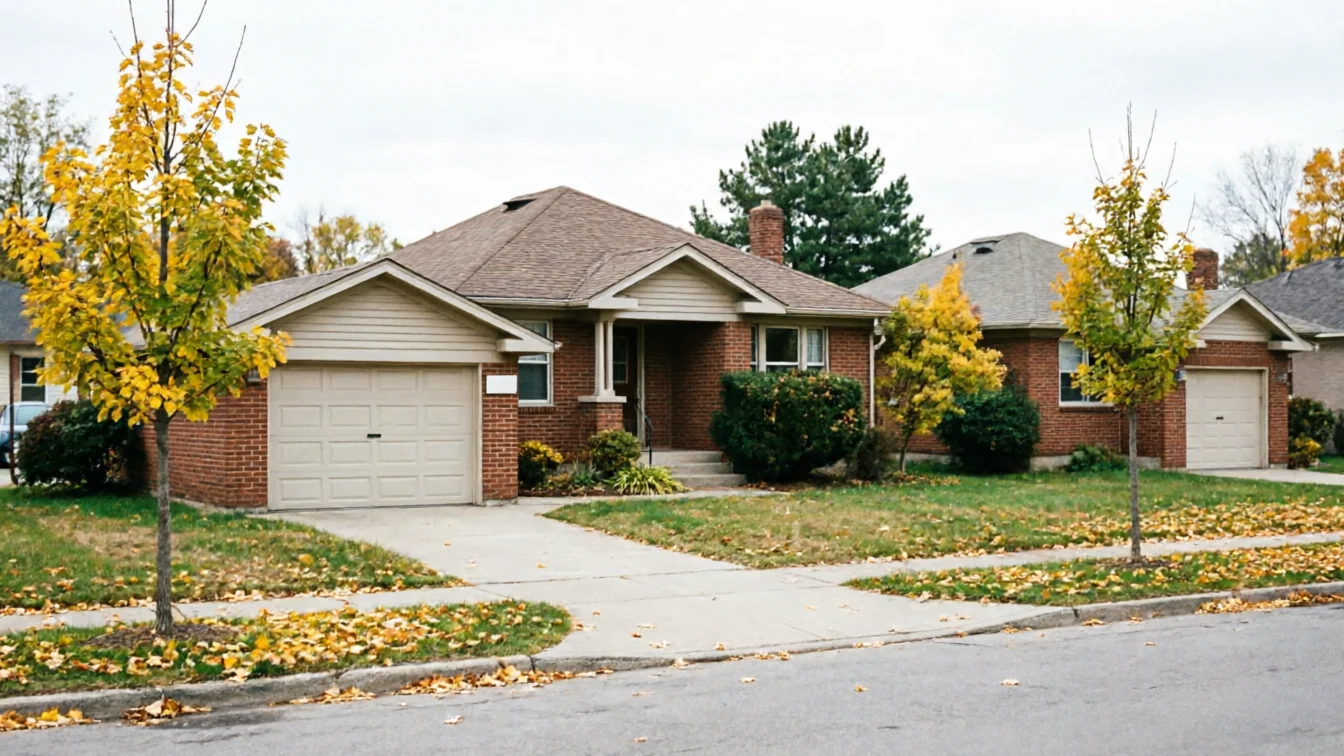
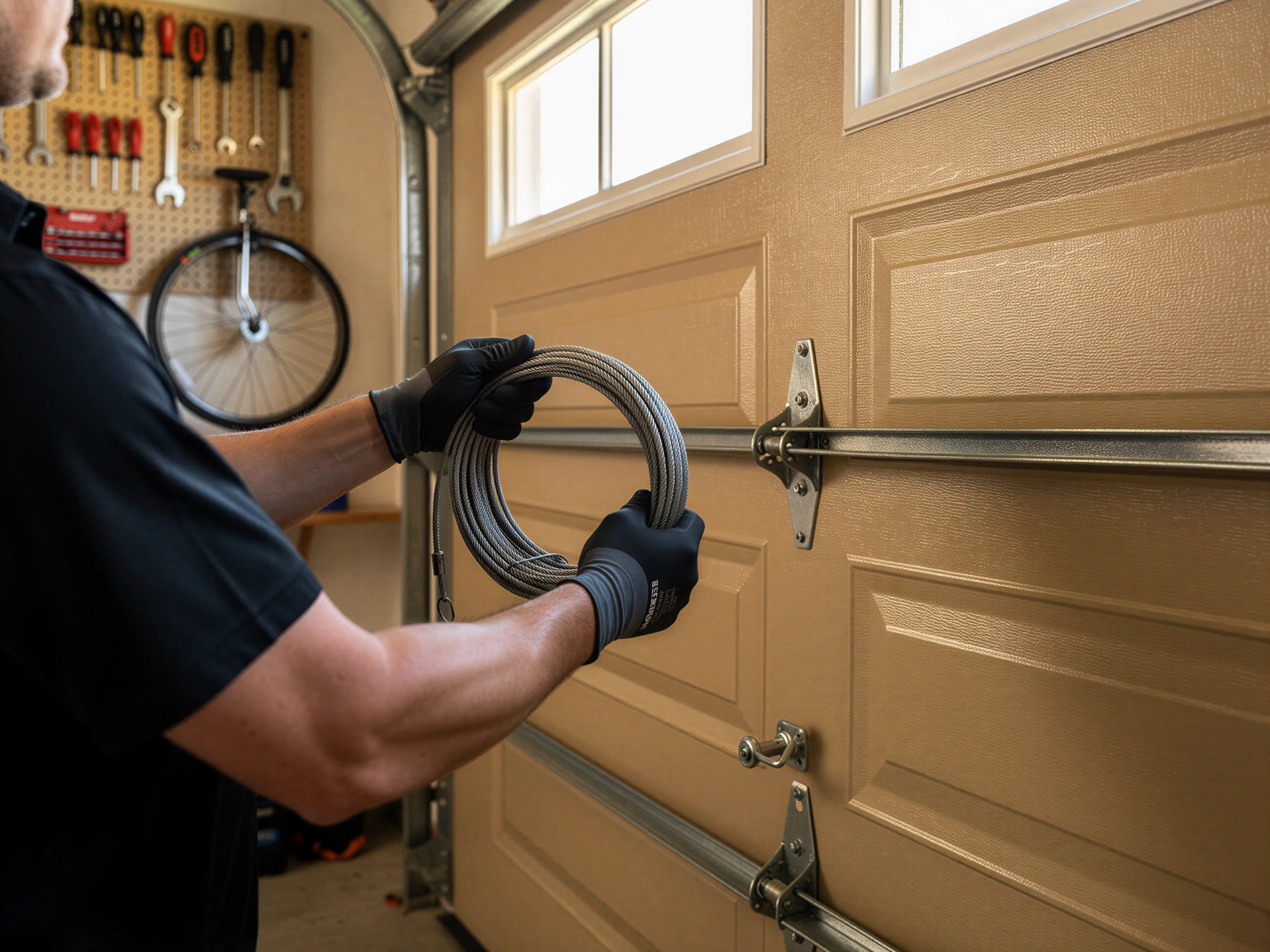
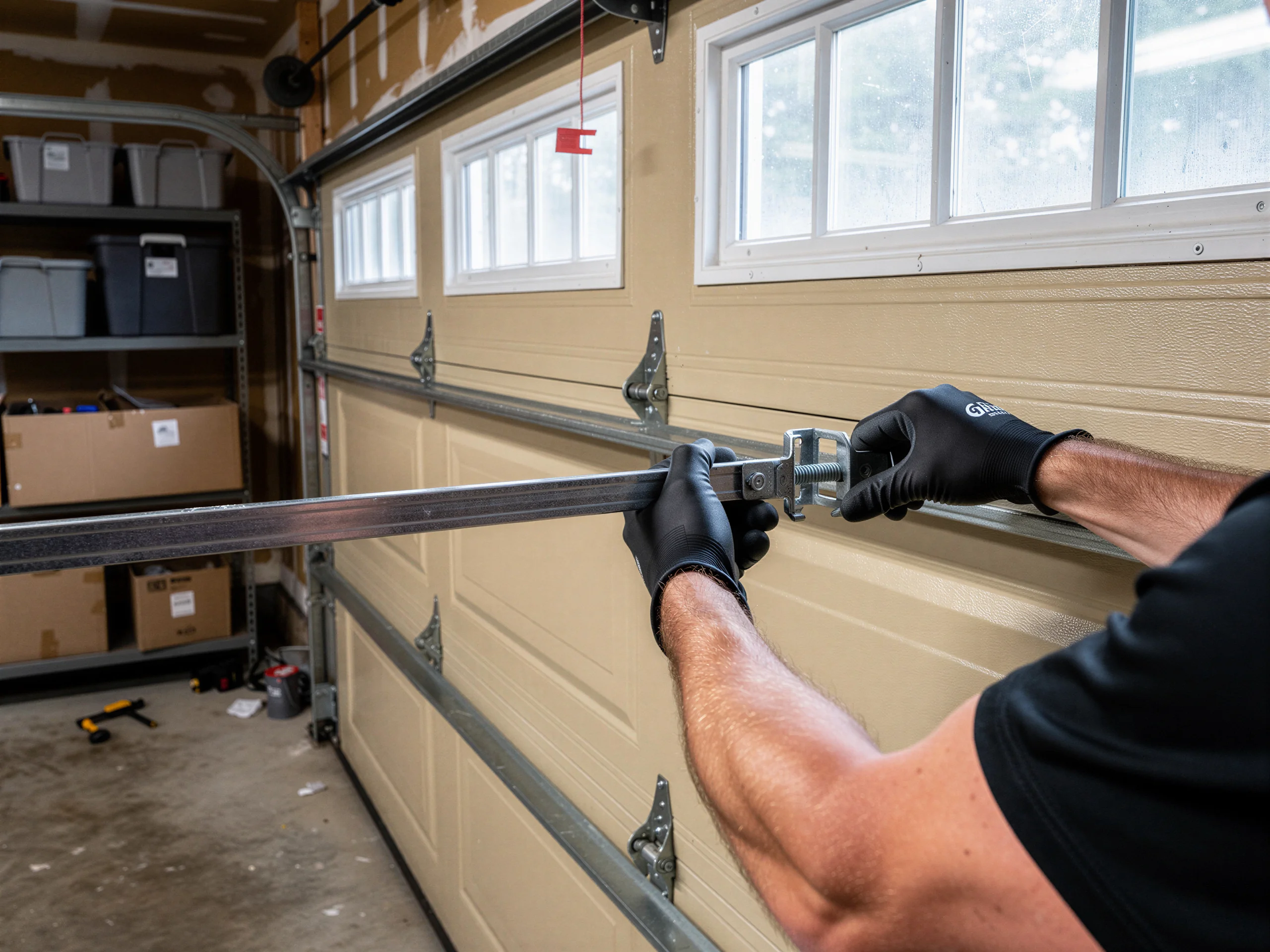
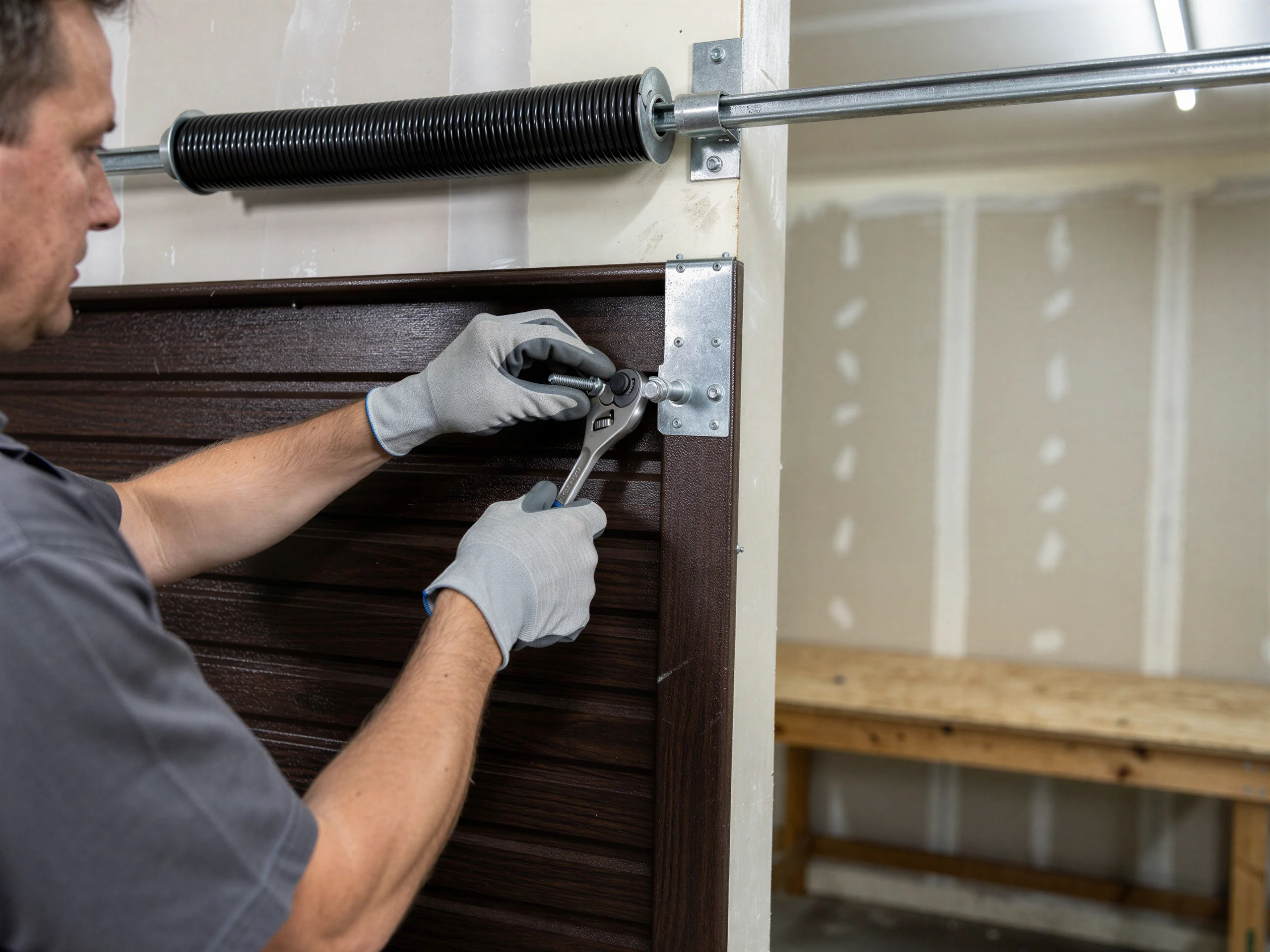
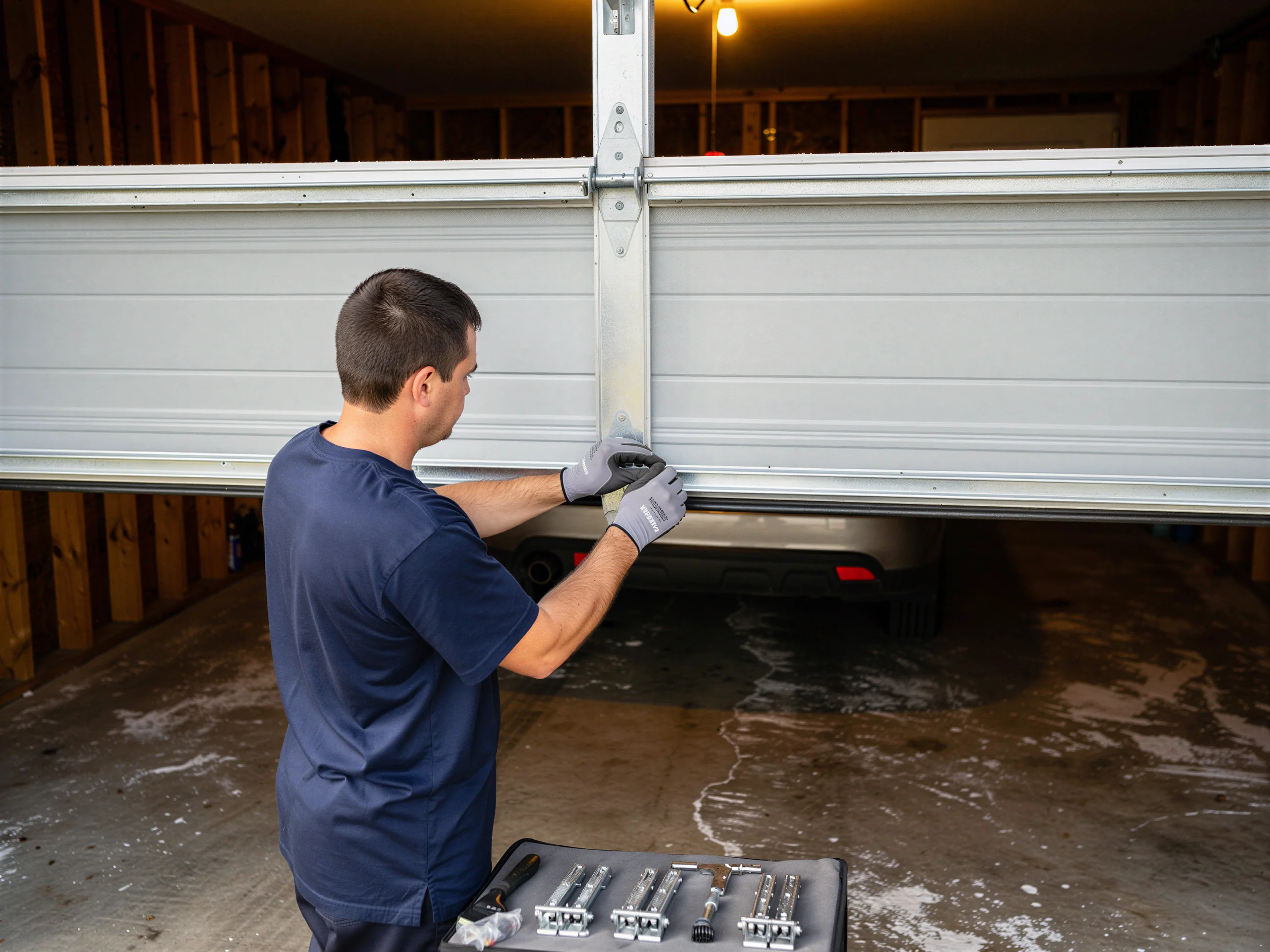
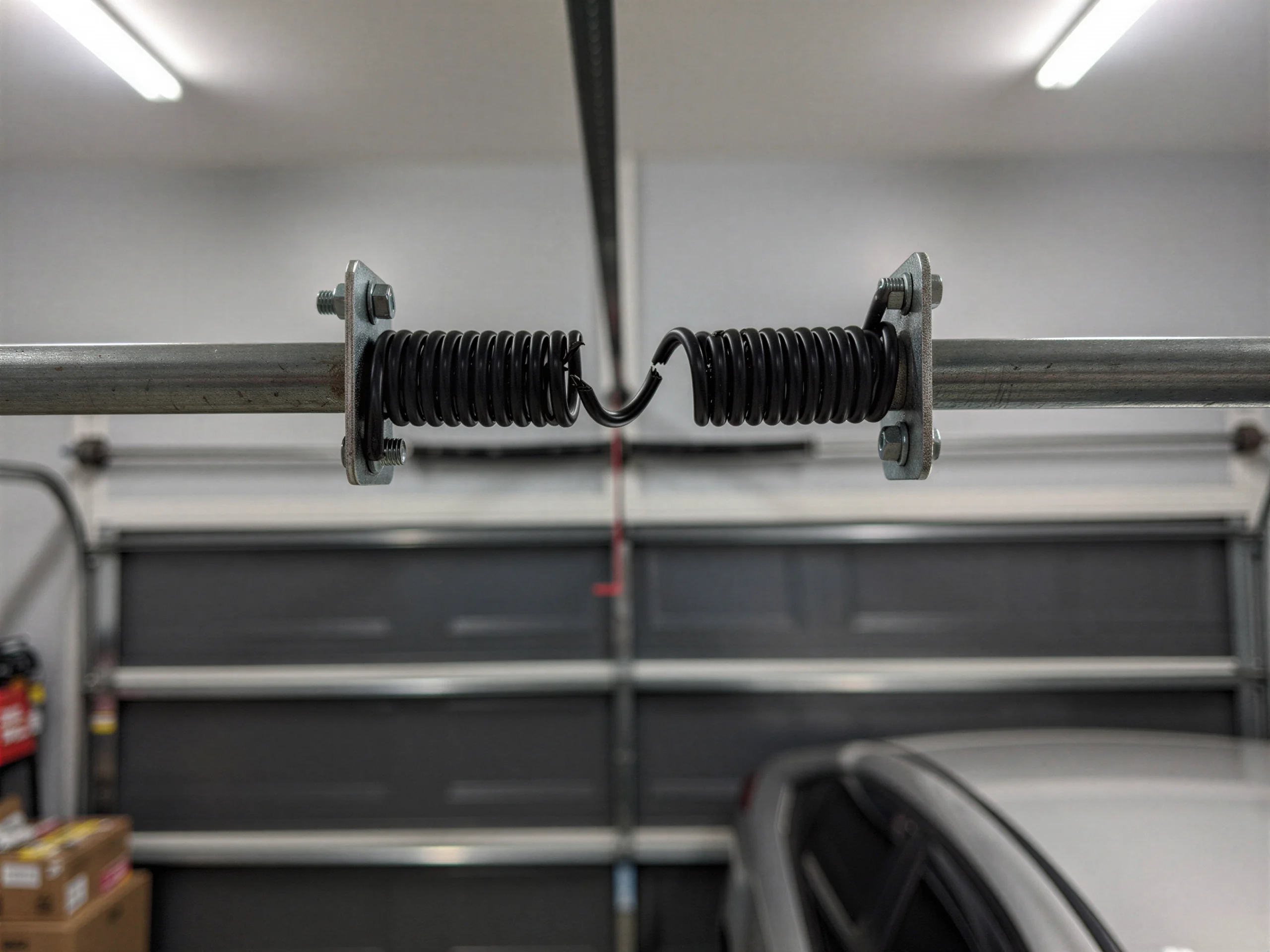
This area sits in a climate band classified as cold and severe, which is the same driver behind why insulated steel doors became the default here rather than the single-layer wood or steel panels you'd see in milder regions. A 1994-era door usually has some insulation, but twenty-plus years of freeze-thaw cycling on the original weatherstripping and bottom seal is enough to let cold air and moisture work into the track and hardware. Combine that with a service area where most of the surrounding housing was built across the 1980s and 90s, and the failure pattern repeats: hardened lubricant, pitted hinges, and springs that have simply outlived their cycle count rather than broken from one event. New installation in this kind of home isn't usually an emergency replacement after a snapped cable. It's more often a planned swap once the original door starts showing its age across multiple small symptoms at once, which is a different conversation than a same-day fix.